Manual Handling Training: A Complete Guide for Irish Workplaces
Lifting, carrying, pushing and pulling are part of almost every job in Ireland. Manual handling training turns those everyday tasks into something workers can do without ending up on the back-injury statistics. Here is what the training covers, who needs it, and how to get certified.
What manual handling actually means
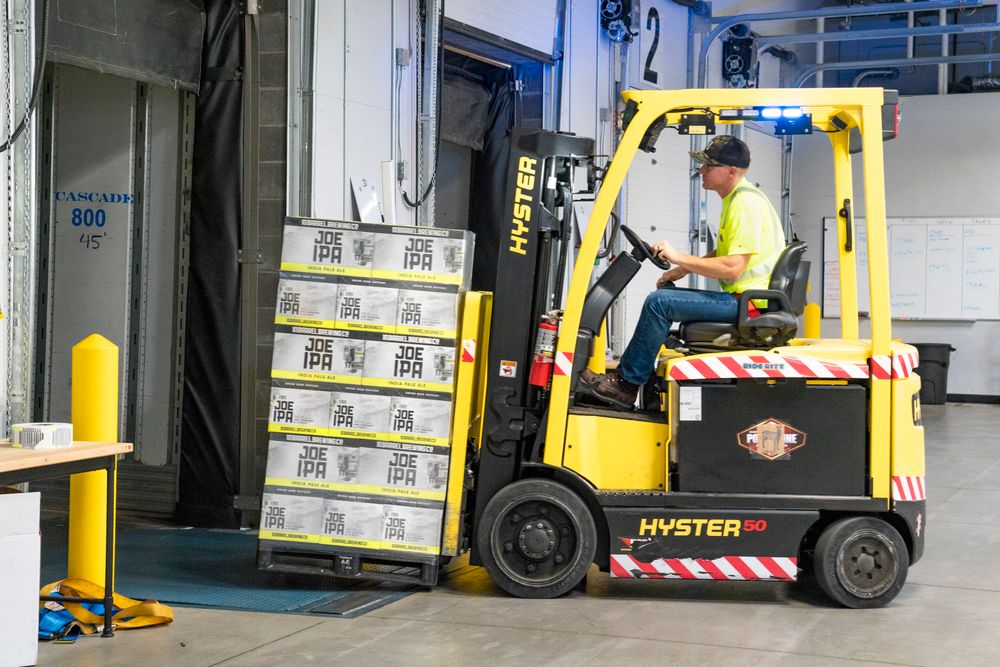
In safety law, "manual handling" is a broader idea than simply heaving a heavy box. It covers any transporting or supporting of a load by hand or bodily force — lifting, lowering, pushing, pulling, carrying and even holding something steady. The load can be a parcel, a patient, a keg, a roll of carpet or a piece of plant equipment. If a person is moving or supporting it with their own muscles, it counts.
That definition matters because it means manual handling risk exists far beyond the obvious warehouse setting. Office staff shifting boxes of paper, carers helping residents reposition, retail workers restocking shelves and tradespeople carrying tools all perform manual handling every working day. Training exists to make sure they do it in a way that protects their spine, joints and long-term health.
Why training is required in Ireland
The duty to train is not optional. Under the Safety, Health and Welfare at Work Act 2005 and the Safety, Health and Welfare at Work (General Application) Regulations 2007employers must reduce the risk of injury from manual handling. Where handling cannot be avoided, the regulations require employers to assess the risk and provide workers with information and training on safe handling techniques.
The Health and Safety Authority (HSA) is the body that enforces these duties. It expects that anyone who carries out manual handling as part of their role has received suitable training appropriate to the tasks they perform. A certificate on file is the simplest way to demonstrate that this duty has been met.
Good manual handling training does not just tick a box — it changes how people move for the rest of their working lives, which is exactly the point of the law.
What a manual handling course covers
A solid course gives workers both the "why" and the "how". The theory explains how the spine works, why poor posture and repetition cause cumulative damage, and how to spot a risky task before lifting. The practical side teaches a repeatable safe-handling routine that becomes second nature with use.
- Anatomy basics — how the back and joints handle load, and what causes strains and disc problems.
- Risk recognition — assessing the task, the individual, the load and the environment before lifting.
- Safe technique — the step-by-step method for lifting, lowering, carrying, pushing and pulling.
- Team handling — how to move awkward or heavy loads safely with a colleague.
- Aids and equipment — when to reach for a trolley, sack truck or hoist instead of muscle.
Manual Handling training from €35
Self-paced, HSA-aligned, certificate the same day — €35 per person.
Online versus in-person training
Traditionally manual handling was delivered in a room with an instructor and a few boxes. Today, much of the learning is just as effective online, where video demonstrations show technique clearly and learners can pause and rewatch. Online study removes travel, scheduling headaches and the cost of pulling a whole shift off the floor at once.
Our online manual handling courseis self-paced and HSA-aligned. Learners complete it on a phone, tablet or laptop, pass a short assessment, and download a certificate the same day for just €35. For employers training several people at once, that is a fraction of the cost and disruption of a classroom session.
How often should training be refreshed?
There is no single legal expiry date, but good practice — and most certificates, including ours — treats training as valid for around three years. Sooner refreshers make sense if the work changes, if new equipment is introduced, or after any incident or near miss involving handling. Treating refreshers as a routine part of the safety calendar keeps technique sharp and the paperwork current.
Key takeaways
- Manual handling covers any lifting, carrying, pushing or pulling by hand or bodily force.
- Training is a legal duty under the 2005 Act and the 2007 General Application Regulations, enforced by the HSA.
- A good course teaches risk recognition and a repeatable safe-handling technique.
- Online training is HSA-aligned, flexible and cost-effective at €35 per person.
- Refresh roughly every three years, or sooner if the work or equipment changes.
Manual handling injuries are among the most common and most preventable workplace harms in Ireland. The fix is rarely complicated — it is knowledge, applied consistently. Train your team well, build the technique into daily routines, and most of these injuries simply never happen.