First Aid at Work in Ireland: Employer Duties Explained
Every Irish workplace, from a two-person office to a busy warehouse, has a legal duty to make sure an injured or suddenly ill person can be helped quickly. Here is what that duty involves and how to meet it without guesswork.
Why first aid at work is a legal duty in Ireland
First aid is not an optional courtesy for thoughtful employers — it is a clear requirement of Irish health and safety law. The Safety, Health and Welfare at Work Act 2005places a general duty on every employer to protect the safety, health and welfare of their employees so far as is reasonably practicable. Being ready to respond when someone is hurt sits squarely within that duty.
The detail is set out in the Safety, Health and Welfare at Work (General Application) Regulations 2007, Part 7which deals specifically with first aid. Part 7 requires employers to provide and maintain first aid equipment and, where the work or workplace warrants it, to appoint trained occupational first aiders. The Health and Safety Authority (HSA) is the body that oversees and enforces these duties.
First aid provision is judged on what your workplace actually needs — not on a fixed national checklist. Two businesses of the same size can lawfully have very different arrangements.
Start with a first aid needs assessment
There is no single rule that says "one first aider per X staff". Instead, the law expects you to assess your own circumstances and provide what is sensible for them. A practical first aid needs assessment looks at:
- The nature of the work — an office carries different risks to a kitchen, a building site or a chemical store.
- Hazards already identified in your risk assessment and safety statement.
- The number of employees and how they are spread across floors, buildings or shifts.
- Shift patterns and lone working, including evenings and weekends.
- How far you are from emergency medical services and how long an ambulance is likely to take.
- Past incidents and the types of injury that have actually occurred.
The outcome of that assessment tells you how many trained people you need, what equipment to stock and where to keep it.
What employers must provide
First aid equipment
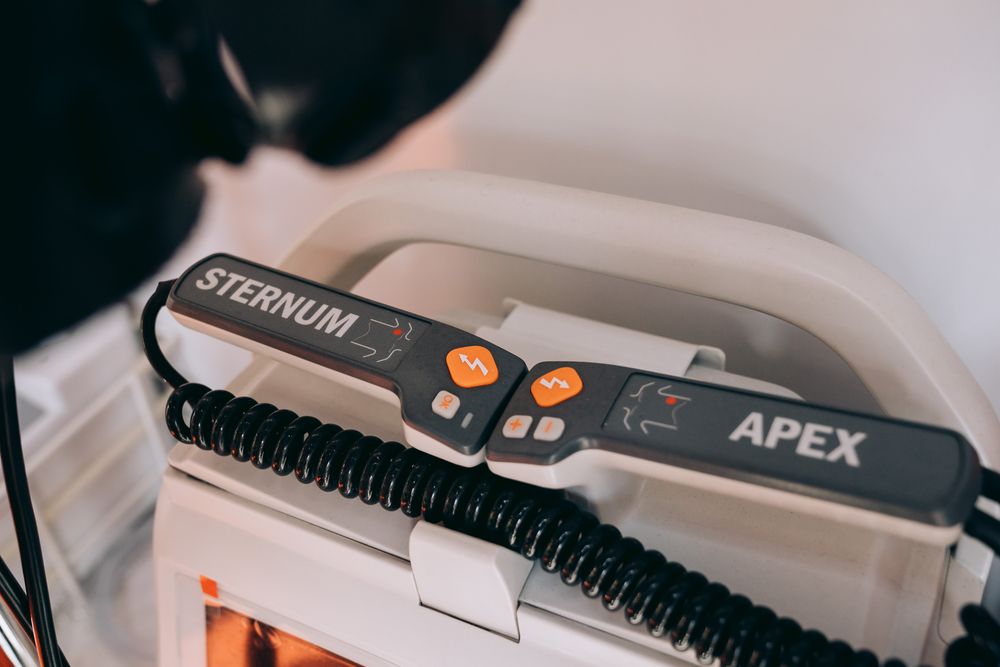
You must provide a suitable, well-stocked first aid box that matches the risks present and is kept properly maintained. Contents should be checked regularly, replaced when used or out of date, and protected from dust and damp. Higher-risk workplaces may need additional items, and some settings benefit from an automated external defibrillator (AED).
Trained first aiders or appointed persons
Where the assessment shows it is needed, you must appoint one or more occupational first aiders who hold a valid, professional qualification. In lower-risk workplaces an "appointed person" — someone who takes charge in an emergency and looks after the equipment — may be sufficient. Either way, someone must be ready to act.
Information and signage
Employees need to know who the first aiders are, where the equipment is kept and how to summon help. Clear first aid signage and a notice listing your first aiders are simple, effective ways to meet this.
Key takeaways
- First aid at work is required under the 2005 Act and the 2007 General Application Regulations, Part 7.
- There is no fixed ratio — provision is based on a needs assessment of your own workplace.
- You must supply suitable equipment, appoint trained first aiders where needed, and tell staff how to get help.
- The HSA enforces these duties and can inspect your arrangements.
- Keep records and review your arrangements whenever the workplace changes.
Keeping first aid arrangements current
First aid provision is not a one-off task. Review it whenever you take on more staff, change premises, introduce new equipment or processes, or after any incident that reveals a gap. Certificates expire, so track renewal dates for your first aiders well in advance to avoid being caught short.
Good records also protect you. Keep a register of trained first aiders and their certificate dates, a log of equipment checks, and an accident book so that injuries are recorded and patterns can be spotted.
First Aid training from €35
Self-paced, HSA-aligned, certificate the same day — €35 per person.
Common mistakes to avoid
- Assuming "the office is safe" needs no first aid. Slips, falls, choking and sudden illness can happen anywhere.
- One first aider for everything. Holidays, sick leave and shift work can leave you with no cover at all.
- Forgetting to maintain the kit. An expired or half-empty box helps no one.
- No plan for raising the alarm. Staff should know exactly who to call and where help is.
Getting first aid right is one of the most straightforward parts of workplace safety to fix — and one of the most valuable. For a wider view, see our guide to how many first aiders you need in Ireland, and make sure your trained staff are confident with CPR and defibrillator basics.