Preventing Falls from Height: Controls That Actually Work
A fall takes a fraction of a second and can change a life forever. The controls that reliably prevent falls are well understood — the challenge is applying them consistently, in the right order, on every job. This guide explains how.
When people think about fall prevention, they often picture a harness. But a harness is one of the last lines of defence, not the first. The most effective protection works further up the chain, by removing the hazard or stopping the fall before it can begin. Understanding that order is what separates genuine prevention from box-ticking.
Think in layers, not single fixes
Effective fall prevention is layered. No single control is perfect, so good sites stack several so that if one fails, another catches the gap. The recognised order of priority runs from eliminating the hazard, through collective protection, down to individual protection:
- Eliminate — design the work so nobody needs to be at height.
- Prevent collectively — guard rails, edge protection and covered openings protect everyone in the area without any action on their part.
- Prevent individually — work-positioning systems that stop a person reaching a fall point.
- Mitigate collectively — safety nets or airbags that reduce the consequences of a fall.
- Mitigate individually — personal fall-arrest harnesses, which rely on the worker using them correctly every time.
Collective protection beats personal protection because it works whether or not the individual remembers to use it. A guard rail never forgets to clip on.
Collective protection first
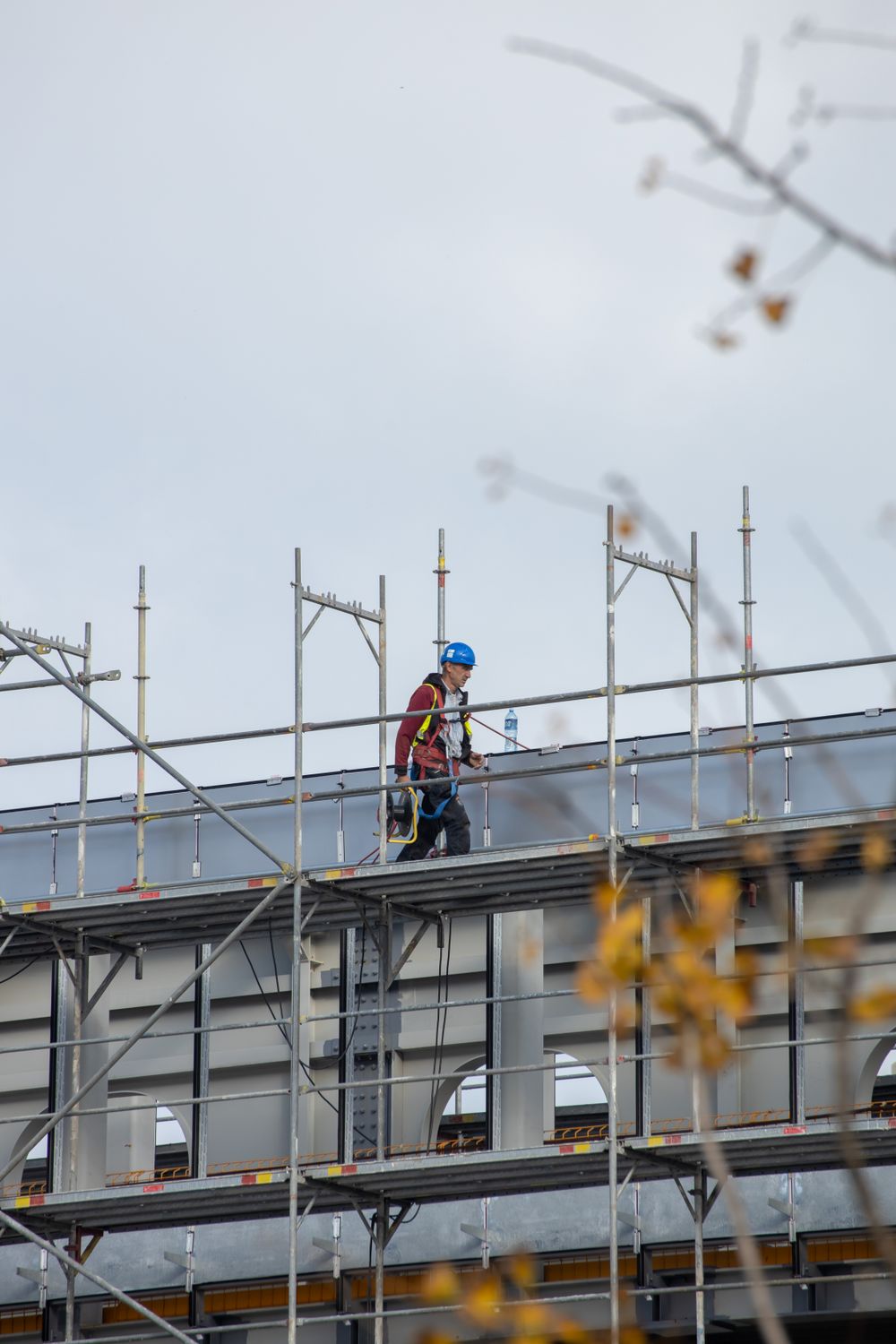
Guard rails and edge protection are the workhorses of fall prevention. They protect everyone in the area, require no decision from the worker, and stay in place for the duration of the job. Wherever there is an open edge, an opening in a floor or a roof edge, the first question should be whether collective protection can be installed. Covers over floor openings should be strong enough to take the load, fixed so they cannot be displaced, and clearly marked.
Fragile surfaces deserve special attention
Many serious falls happen through fragile surfaces — rooflights, old asbestos cement sheets, weathered slates and skylights that look solid but cannot bear weight. These should be identified before work starts, clearly marked, and protected with covers, guard rails or platforms that spread the load. Never assume a roof surface is sound just because it looks intact.
⭐ Key takeaways
- Work in layers: eliminate, prevent collectively, then mitigate.
- Collective protection like guard rails beats personal protection.
- Identify and protect fragile surfaces before anyone goes near them.
- Control falling objects to protect people working below.
- Have a rescue plan and people trained to carry it out.
Don't forget falling objects
Preventing falls is not only about people. Tools, materials and debris falling from height injure those below. Toe boards, brick guards, debris netting and exclusion zones all help. Keeping work areas tidy and securing loose items is one of the cheapest, most effective controls available.
Rescue: the plan you hope never to use
If you rely on a fall-arrest harness, you must also plan how to rescue someone after a fall. A person left suspended in a harness can deteriorate quickly, so recovery must be prompt. That means having a rescue method, the right equipment and people trained to use it on site before work begins. A harness without a rescue plan is only half a control.
Working at Heights training from €35
Self-paced, HSA-aligned, certificate the same day — €35 per person.
Weather, lighting and changing conditions
Outdoor work at height is at the mercy of conditions that can change within minutes. Wind is the most underestimated factor: a gust can unbalance a worker, turn a sheet of material into a sail, or destabilise a platform. Rain and frost make surfaces slippery, and poor light hides edges, fragile panels and trip hazards. Before work starts, and again whenever conditions shift, someone competent should judge whether it is still safe to continue. The discipline to stop and wait — or to reschedule entirely — is itself a fall-prevention control, and it should never be overridden by time pressure or a tight deadline.
Supervision, behaviour and training
Hardware only prevents falls if people use it properly. Good supervision spots the worker about to overreach, the missing guard rail, the harness clipped to the wrong anchor. A workplace culture where stopping unsafe work is encouraged, not punished, prevents more falls than any single piece of equipment. Underpinning all of this is training: people who understand the hazards make safer choices without being told.
These controls connect directly to the duties in our guide to the Irish work at height regulations, and they build on the everyday practices in our practical working at heights guide. Read together, they give you a complete picture of how to keep people safe above ground.
The reassuring truth is that falls are not random accidents — they are the result of missing or skipped controls. Put the layers in place, keep your team trained and supervised, and the great majority of falls simply never happen.