Working at Heights: A Practical Guide for Irish Workplaces
Falls from height remain one of the most serious causes of workplace injury in Ireland. The good news is that almost every fall is preventable with sensible planning, the right equipment and a team that knows what to do. Here is a practical, jargon-free guide.
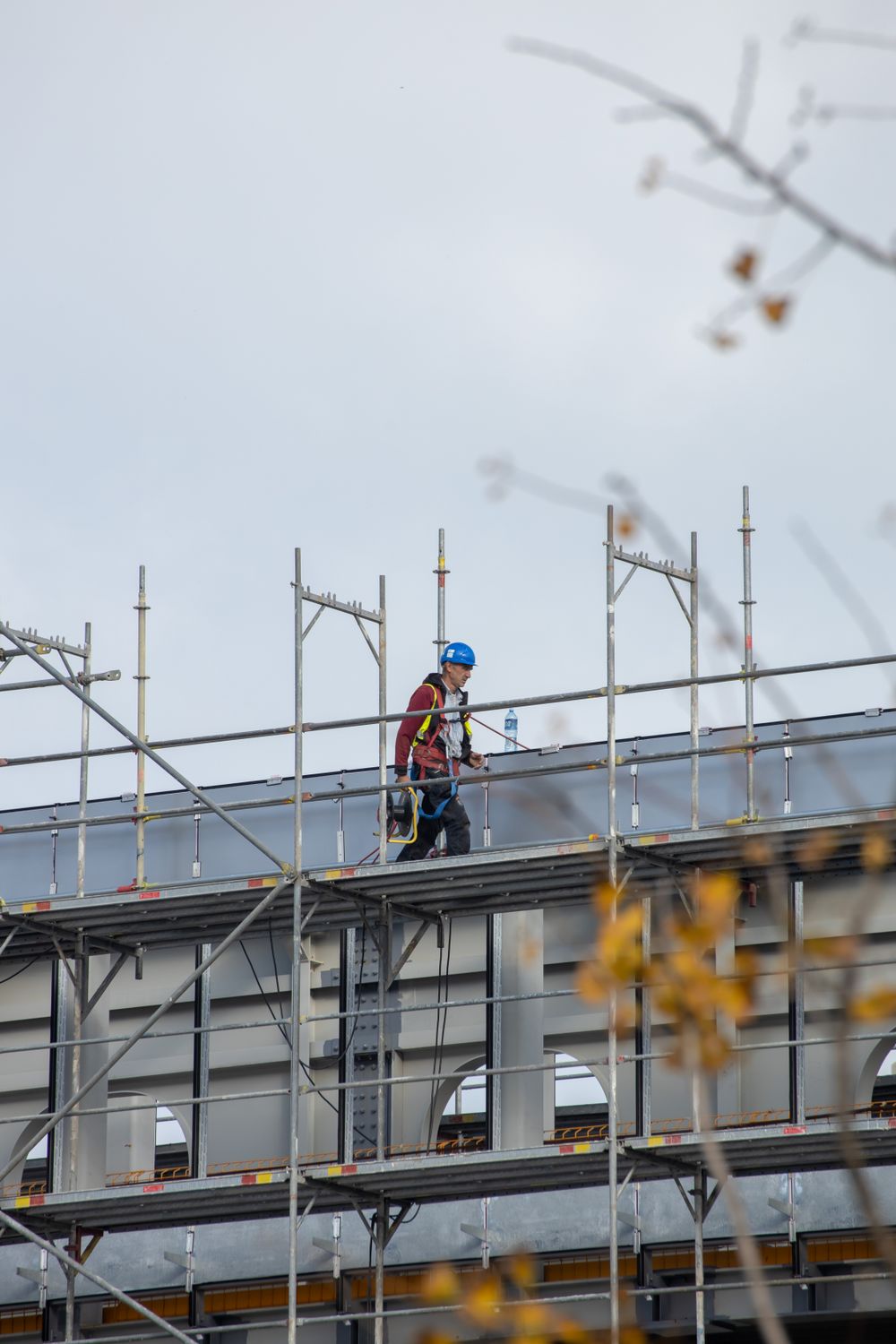
Work at height happens far more often than people realise. It is not only roofers and steel erectors who are exposed — anyone using a stepladder to reach stock, clearing a gutter, loading a trailer or working near an unprotected edge is working at height. Under Irish law, work at height simply means any work where a person could fall a distance liable to cause injury, including falls below ground level such as into an excavation.
This guide walks through the way a competent Irish employer should approach the task: assess whether the work can be avoided, plan it carefully when it cannot, pick equipment in the right order of priority, and make sure everyone involved is properly trained and supervised.
Start by avoiding the risk
The single most effective control is to not work at height at all. Before reaching for a ladder, ask whether the job can be done from the ground. Many tasks that were traditionally done at height can now be carried out using extending tools, ground-level assembly, or remote inspection equipment. Designing the work so the hazard never arises is always the strongest answer.
Where work at height genuinely cannot be avoided, the next step is to prevent a fall from happening. This is where guard rails, working platforms, scaffolds and mobile elevating work platforms come in. Only when a fall cannot be prevented should you rely on equipment that minimises the distance and consequences of a fall, such as nets, airbags or a personal fall-arrest harness.
The order matters: avoid the work, then prevent the fall, then minimise the consequences. Reaching straight for a harness skips the two most reliable layers of protection.
Plan and risk-assess the job
Every work-at-height task should be planned in advance and supported by a written risk assessment. The assessment does not need to be long, but it does need to be specific to the job in front of you rather than a generic template pulled from a drawer. A solid assessment considers:
- The height, duration and frequency of the task
- The condition of the surface being worked on or from
- Weather, wind and lighting where the work is outdoors
- The competence and fitness of the people doing the work
- Fragile surfaces such as rooflights, asbestos cement sheets or old slates
- How materials and tools will be raised and lowered safely
- What happens in an emergency, including rescue from height
Emergency planning is the part most often forgotten. If someone ends up suspended in a harness after a fall, you have only minutes to recover them safely. A rescue plan, and people trained to carry it out, must be in place before work starts — not improvised on the day.
Choose the right access equipment
Ladders are not banned, but they are intended for short-duration, low-risk tasks where a more stable platform is not reasonably practicable. For anything sustained or repetitive, a podium step, tower scaffold or powered platform is usually the safer choice. Whatever you select, it must be inspected before use, suitable for the load, and set up by someone competent. Our ladder safety guide covers the practical checks in more detail.
⭐ Key takeaways
- Work at height means any work where a fall could cause injury — including falls below ground level.
- Follow the hierarchy: avoid the work, prevent the fall, then minimise the consequences.
- Plan and risk-assess every job, and include a workable rescue plan.
- Match the equipment to the task — ladders suit only short, low-risk work.
- Training and competence sit underneath every other control.
Training and competence
Equipment is only as safe as the person using it. Everyone who works at height, supervises the work or selects the equipment should be competent for their role. That means understanding the hazards, knowing how to inspect and use the equipment, and recognising when conditions have changed enough to stop. Refresher training keeps that knowledge current as people, sites and equipment change over time.
Working at Heights training from €35
Self-paced, HSA-aligned, certificate the same day — €35 per person.
Inspection and maintenance
Access equipment degrades. Ladders develop loose rungs, scaffolds get altered by other trades, and harnesses suffer from UV damage and abrasion. Build a simple routine of pre-use visual checks plus periodic formal inspections, and keep records. If a piece of equipment fails a check, take it out of service immediately and tag it so nobody uses it by mistake.
Putting it all together
Good height safety is rarely about one heroic control. It is the combination of avoiding the work where possible, planning what remains, choosing stable access, training the team and keeping equipment in good order. Each layer covers the gaps in the others. If you want to see how a structured approach reduces falls on real sites, our guide to preventing falls from height goes deeper into the practical controls.
For most Irish workplaces, the path to safer work at height starts with a competent, well-trained team. A short online course gives everyone a shared understanding of the hazards and the law, which makes every conversation on site easier and every job safer.